Claude Code + MCP + Telegram: A Documented, Controlled Development Workflow
A few months ago, I wrote about how I "built" a simple financial tracking system with Claude Code. Since then, both Claude and I have evolved quite a bit.
I've been developing a more serious financial platform (.NET, Angular, PostgreSQL), but that's not the point today – the methodology is.
The MCP + Telegram Integration
You can connect MCP servers to Claude Code, giving the LLM custom tools. I connected a Telegram bot: 50 lines of Python. In the CLAUDE.md I wrote: when you're done, notify via Telegram. If you're stuck, notify. If something breaks, notify.
Combined with the claude --dangerously-skip-permissions flag, the picture comes together. Claude Code writes files, runs commands, makes decisions without asking for permission. I give it the task, step away from the computer or switch to another task, and the Telegram message comes when it's done or when a decision is needed.
Automatic Development Logs
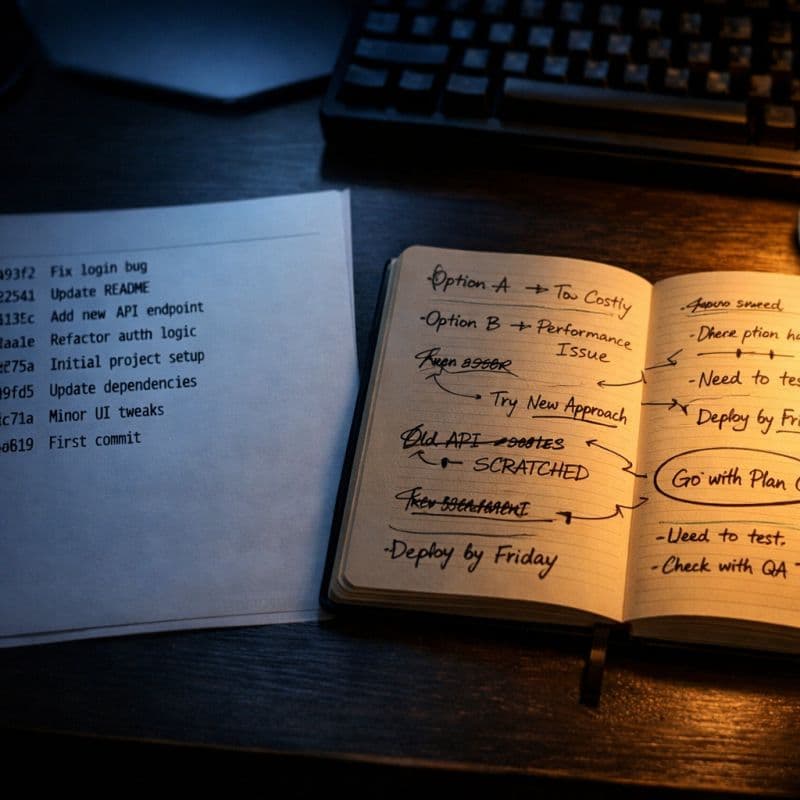
A broader thought: Git tells you what changed, but not what decisions were made along the way. If an LLM agent describes what it did in human language, that's a development log – timestamped, readable. Written to a database alongside the commit history, you get a "what happened and why" log. I can envision this becoming an architectural element – a modern-day development documentation.
The Mentor's Perspective
Zoltán Szécsényi connected Telegram to his Billman ERP system this week – a system he's been developing for 30 years, the IT backbone of his businesses. Different context, but the same pattern: the messages exist in the system, but it doesn't send push notifications to your phone – that's where Telegram comes in. Zoltán and I talk a lot about AI agents too, and he rightly points out that unsupervised autonomy is a serious engineering risk. I use it in a controlled way on my own projects, but for business-critical systems, that's a different question. Telegram, however, solves the same problem in both worlds: staying close to what's happening without sitting in front of the system.
Do You Need Software Experience?
In the AI hype cycle, the era of custom-built solutions is coming. We won't be subscribing to SaaS products – we'll be subscribing to the services that let us build things ourselves. But the development and support phase still requires software experience today. With zero IT background, it's shooting in the dark.
Example: in Angular, Claude put the HTML, SCSS, and TypeScript into a single file. It works, but it's hard for humans to read. It's easier for the AI because it fits in the context window. It's no coincidence that React feels more natural to models. Decisions like these are invisible without architectural knowledge. At my previous jobs, I'd have gotten my hand slapped for this – it wouldn't pass code review.