Claude Code Budapest Meetup – A Reality Check
Together with my colleague Dávid Páli, we attended the Claude Code Budapest meetup, where Bence Nagy gave a presentation. Bence has been working on Anthropic's Claude Code development team for 5 months. The talk wasn't a product demo – it was real development practices, internal workflows, and concrete examples.
The Most Interesting Part
The highlight was when Bence brought one of his American colleagues into the call, and attendees could ask her questions directly. She's been with the team since February, and according to her, she hasn't written code manually yet. Despite that, a developer closes an average of ~97 PRs per week.
One of her most striking statements: "We are not coders anymore. We are idea machines."
On Scale
The volume of Claude API usage illustrates the scale well: they run so many requests that if it were deducted from their salaries, they'd be in the red. Claude isn't a helper tool for them – it's core development infrastructure.
An important caveat was mentioned: they don't currently use it for critical systems (e.g., C++, aircraft control), but in business, backend, and product development environments, it's already dominant.
Multi-Agent Prototype
Bence also demonstrated a multi-agent (swarm) prototype where multiple agents communicate with each other simultaneously. The concept itself isn't new, but here it was visible in a real development environment, through a working example.
This is essentially an Agent-to-Agent (A2A) workflow: we define the goals, and the agents work collaboratively, breaking tasks down among themselves. It's a realistic vision that one professional will coordinate 10–100+ agents – a future many have been predicting for years, including György Tilesch.
Claude Code as a Central Workspace
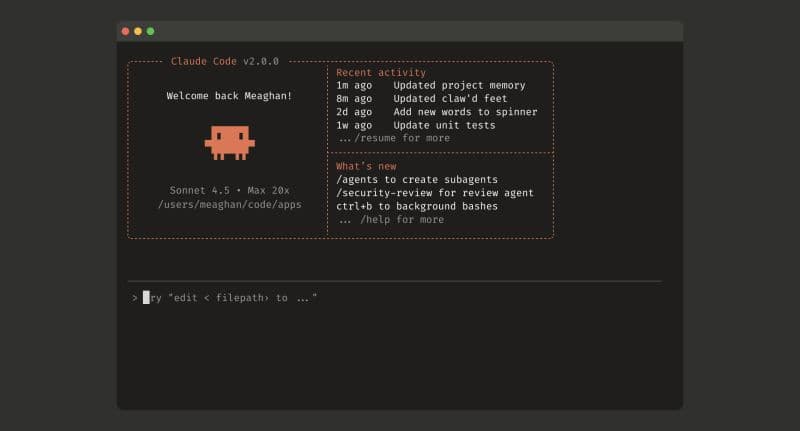
One of the most powerful insights for me was when Bence mentioned that he organized the meetup itself, the emails, and all the coordination from the Claude Code CLI.
For him, Claude Code isn't a coding tool – it's a central workspace through which he communicates, organizes, and develops.
Methodological Takeaways
The methodology section was also illuminating. They hand off brownfield projects to juniors as if they were greenfield – this isn't a technical trick but a deliberate approach. The agents hide the legacy complexity, so the focus stays on system logic.
The Bottom Line
Overall, this isn't about a new tool appearing – it's a level shift. The focus of software development is increasingly moving toward architectural and business thinking, while the code itself becomes a lower abstraction. Within 5–10 years, both industry and education are expected to transform at the paradigm level.
The barrier to entry won't be a new language or framework – it will be systems-level thinking.